

-
Posted on 1st April, 2026
Career Pathways After a Master of Nursing in Australia
The healthcare sector in Australia continues to grow, creating strong demand for highly qualified nursing professionals. According to the Australian Government Department of Health, nurses are one of the largest and most essential groups in the healthcare workforce, supporting hospitals, community health services, aged care facilities, and specialised clinical settings. For registered nurses looking to expand their career opportunities, pursuing a Master of Nursing in Australia can open the door to advanced roles, leadership positions, and specialised areas of practice.
A Master of Nursing not only strengthens clinical knowledge but also develops leadership, research, and decision-making skills that are increasingly valued in modern healthcare systems.

CLINICAL NURSE SPECIALIST
One of the most common career pathways after completing a Master of Nursing is becoming a Clinical Nurse Specialist (CNS). These nurses specialise in particular areas such as critical care, emergency nursing, mental health, infection control, or aged care.

Clinical Nurse Specialists play an important role in delivering high-quality patient care, mentoring junior nurses, and implementing evidence-based practices within healthcare teams. According to the Australian Institute of Health and Welfare, specialised nursing roles are vital for managing complex patient needs and improving healthcare outcomes across Australia.
NURSE LEADERSHIP AND MANAGEMENT ROLE

A Master of Nursing degree can also support progression into leadership and management positions within healthcare organisations. Nurse managers and nurse leaders are responsible for coordinating clinical teams, improving healthcare delivery, and ensuring patient safety standards are maintained.
These roles require advanced knowledge in healthcare systems, communication, and leadership—skills that are typically developed through postgraduate nursing education. As Australia’s healthcare system continues to expand, the need for strong nurse leaders is becoming increasingly important.
NURSE EDUCATOR
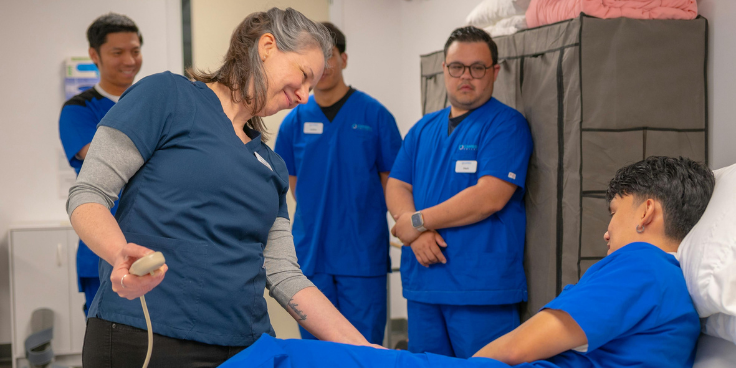
Another career pathway after a Master of Nursing is becoming a Nurse Educator. Nurse educators contribute to the development of future healthcare professionals by teaching nursing students and providing professional training for clinical staff.
They work across universities, healthcare organisations, and professional training environments, ensuring that nursing education aligns with current healthcare standards and evidence-based practices.
PATHWAY TOWARD ADVANCED PRACTICE
Many nurses pursue postgraduate education as a step toward advanced clinical practice roles, including the pathway to becoming a Nurse Practitioner. These highly skilled professionals provide advanced patient care, conduct assessments, develop treatment plans, and contribute to improving healthcare services
Postgraduate study helps nurses build the advanced clinical expertise and critical thinking skills required for these roles
ADVANCING YOUR NURSING CAREER WITH IHM
For registered nurses seeking to advance professionally, the Master of Nursing at the Institute of Health & Management (IHM) offers a career-focused pathway designed to support professional growth.
The program combines advanced nursing practice, leadership development, and evidence-based healthcare knowledge, helping nurses move into specialised or senior roles within the healthcare system.
IHM is recognised as #1 in Australia for Student Support & Services and Skills Development (QILT) and provides industry-focused education supported by experienced faculty and modern simulation labs.
For nurses looking to strengthen their expertise and unlock new career opportunities, pursuing a Master of Nursing in Australia can be a powerful step toward shaping the future of their healthcare career.